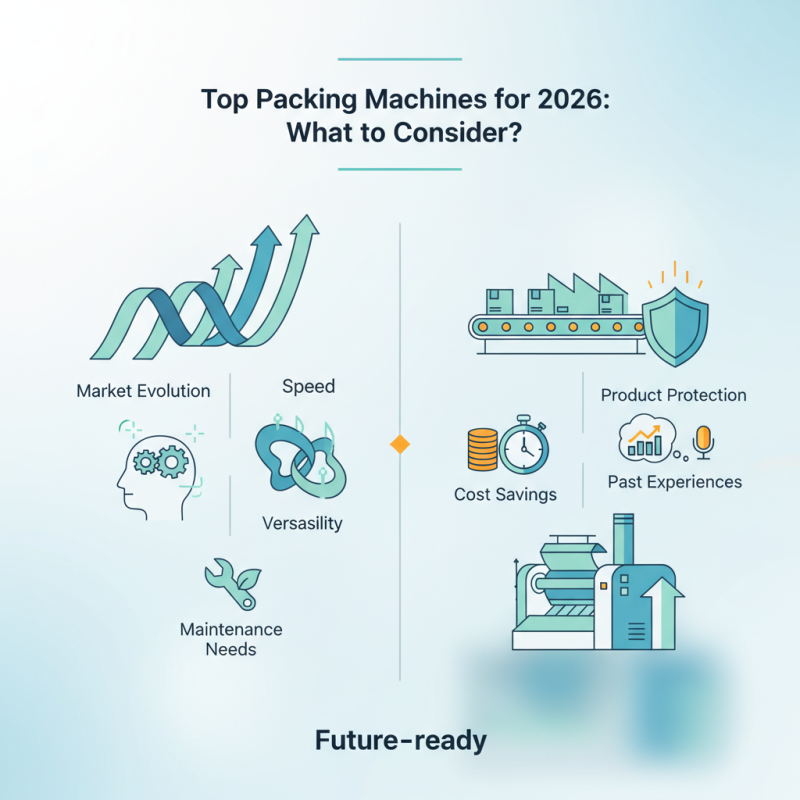
Top Packing Machines for 2026 What to Consider?
As the market evolves, the demand for efficient Packing machines continues to grow. In 2026, companies must carefully evaluate the features that matter most in these machines. A reliable packing machine not only increases productivity but also enhances product protection.
Choosing the right packing machine requires balancing technology and user-friendliness. Brands must consider machine speed, versatility, and maintenance needs. Each detail can significantly impact overall performance. Companies sometimes underestimate the importance of reliable after-sales support and training.
Investing in a packing machine involves weighing costs against long-term benefits. An ideal choice could save money and time. It’s vital to reflect on past experiences and market feedback. In this rapidly changing landscape, a machine that meets future needs is essential for success.
Overview of Packing Machine Types and Their Applications
When selecting packing machines, understanding the types and their applications is crucial. Common types include vertical form-fill-seal, horizontal flow wrappers, and case packers. Each type serves different functions and industries. For instance, vertical form-fill-seal machines are often used in food packaging due to their efficiency and versatility. They provide quick packaging for liquids and powders alike. On the other hand, case packers are ideal for larger products, ensuring swift and secure packaging for shipping.
Consider your product's unique needs. The dimensions, weight, and material should guide your choice of packing machine. If your product is fragile, a machine that offers gentle handling is essential. Conversely, if you handle high-volume items, speed becomes your priority. Small adjustments in setup can significantly impact efficiency and product integrity.
**Tips:** Always test your chosen machine with your actual product. This helps identify any shortcomings early. Regular maintenance is also key to prolonging the longevity of equipment. Update your processes with new technology to keep pace with industry changes while ensuring safety and reliability.
Top Packing Machines for 2026: Overview of Packing Machine Types and Their Applications
Key Features to Consider When Choosing Packing Machines
When selecting packing machines for 2026, it's vital to understand key features. Consider the machine's speed and efficiency. Different products require different packing methods. A high-speed machine may suit mass production, while a slower model works for delicate items. It’s essential to balance these aspects based on your specific needs.
Automation is another critical factor. Fully automated machines can reduce labor costs and minimize errors. However, semi-automated options might allow for greater flexibility in smaller operations. Additionally, the ease of maintenance should not be overlooked. Machines that are difficult to maintain can lead to downtime and increased costs.
Compatibility with various materials also matters. The best packing machine should handle diverse materials, from plastic to biodegradable options. This versatility is crucial as consumer preferences shift towards sustainable choices. Explore machines capable of adapting to these changes. Keep in mind, not all machines will meet every need perfectly. Each choice carries specific trade-offs that require your reflection.
Technological Innovations Shaping Packing Machines in 2026
In 2026, packing machines will see impressive technological innovations. Automation will play a central role. Machines that can learn from their environment will enhance efficiency. This means they can adapt to different products without extensive reprogramming. Smart sensors will monitor quality, reducing waste. The focus will shift towards real-time adjustments during the production process.
Another significant trend is sustainability. Eco-friendly materials will be prioritized in packing solutions. Companies will invest in machines that reduce plastic usage. Energy-efficient designs will also gain traction, helping businesses cut costs. While these advancements promise great benefits, challenges remain. Integrating new technologies can be expensive and complex. Companies must consider the learning curve for their workforce.
Finally, user interfaces will become more intuitive. Operators will rely on clear visuals and simple controls. However, this can introduce a learning challenge for less tech-savvy workers. As packing machines evolve, balancing innovation with usability will be key. The potential is vast, but the journey is fraught with hurdles.
Cost Analysis: Budgeting for Your Packing Machine Investment
When considering packing machines for your business, budgeting is crucial. A well-planned cost analysis can save you from unforeseen expenses. Start with the initial investment. Automated machines can range significantly in price. More advanced models may offer better efficiency. However, they require higher upfront costs.
Don’t forget to account for ongoing expenses. Maintenance costs can add up over time. Regular servicing is necessary to ensure optimal performance. Think about training staff as well. This can incur additional costs that should not be overlooked.
Unexpected issues can arise, impacting your budget. It’s wise to set aside contingency funds. Evaluate the total cost of ownership. This includes energy consumption and potential downtime. Ensure your investment aligns with long-term business goals. Balancing initial price against future savings can be a challenge. Effective planning is key to maximizing your packing machine investment.
Top Packing Machines for 2026: What to Consider? - Cost Analysis: Budgeting for Your Packing Machine Investment
| Machine Type | Average Cost ($) | Production Speed (units/hour) | Maintenance Cost (annual) ($) | Energy Consumption (kWh) |
| Vertical Form Fill Seal | 15,000 | 100 | 2,000 | 50 |
| Horizontal Flow Wrapper | 20,000 | 150 | 3,000 | 70 |
| Cartoning Machine | 25,000 | 80 | 4,000 | 100 |
| Automatic Pouch Maker | 18,000 | 120 | 2,500 | 60 |
| Shrink Wrapper | 12,000 | 200 | 1,500 | 40 |
Environmental Sustainability Considerations in Packing Machine Design
In recent years, environmental sustainability has become a significant factor in packing machine design. Companies are now prioritizing eco-friendly materials and energy-efficient technologies. The goal is to minimize waste while maintaining high performance. Many packing machines use recycled materials, which reduce the carbon footprint. This shift reflects a growing awareness of the ecological impacts of packaging.
Moreover, incorporating renewable energy sources is on the rise. Some machines can even operate with solar power. This innovative approach is still in its early stages, but shows promise for future designs. However, the transition is not without challenges. Many manufacturers struggle with the initial costs and the complexity of sustainable practices.
It is vital to address these issues while striving for better designs. Collaboration among engineers, environmentalists, and manufacturers can foster innovation. By sharing ideas, the industry can find effective ways to balance productivity and sustainability. The road ahead requires dedication and creativity. As technology advances, continuous improvement will be essential. The vision for packing machines in 2026 includes a commitment to greener solutions.