
Who Are the Top Camping Grill Manufacturers in China?
China is a major sourcing base for outdoor cooking equipment, including the Camping Grill. Its suppliers range from export-focused factories to smaller manufacturers with specialized product lines. For buyers, a polished catalog is only the starting point. The useful questions are practical: What materials are used? How are burners, hinges, and grates tested? Can the factory provide clear specifications and consistent samples?
Details matter. A compact folding grill may suit weekend campers, while a larger cart model needs stable legs, usable storage, and reliable heat control. Product photos rarely show how a grill performs after repeated setup or transport. Ask for product data, quality-control details, and sample units where possible. Then compare those findings with the supplier’s stated production capacity and customization options. Claims deserve checking.
This guide introduces leading Chinese Camping Grill manufacturers and the strengths buyers may want to evaluate, such as product range, manufacturing experience, and export support. “Top” does not mean the same thing for every buyer. A distributor may prioritize steady lead times, while a private-label brand may focus on design flexibility and packaging. Public company information can also be incomplete, so rankings should be treated as a starting point, not a guarantee. A careful supplier review takes time—and even a neat comparison table cannot replace direct questions and product testing.
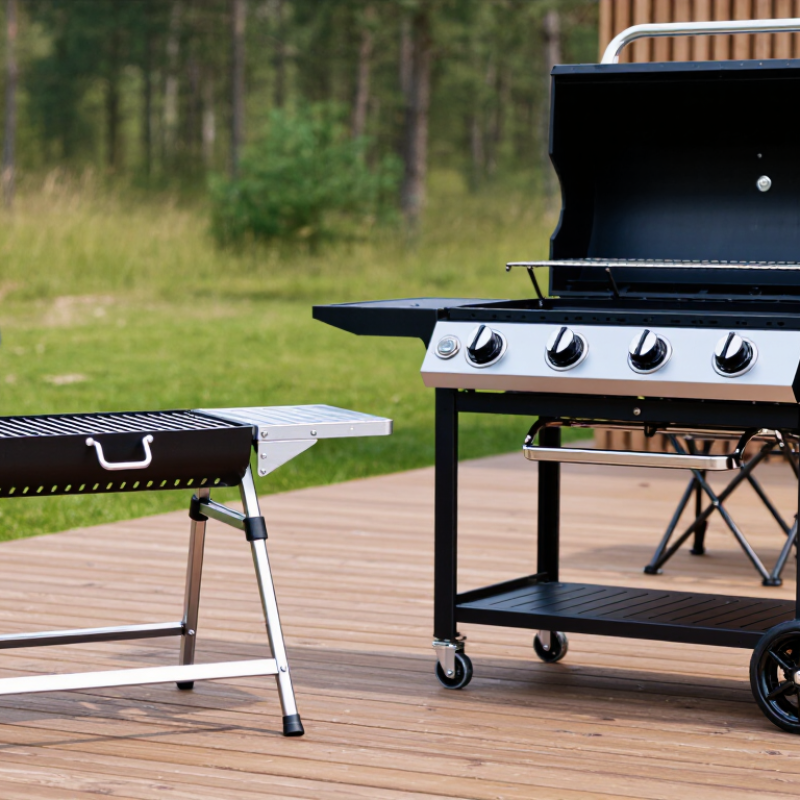
China’s Camping Grill Manufacturing Landscape
China’s Camping Grill Manufacturing Landscape
China’s camping-grill supply base draws on established metalworking, stamping, welding, coating, and appliance-component industries. UNIDO’s International Yearbook of Industrial Statistics 2024 estimates that China contributed nearly 30% of global manufacturing value added in 2022. That scale supports varied production runs, from compact folding grills to heavier steel models. It does not guarantee consistent quality. Factory capability, material thickness, weld finish, and heat-control design can differ widely between suppliers.
Tips: Request a sample and inspect it cold and after repeated heating. Check grate spacing, hinge movement, coating condition, and packaging protection. Ask for material specifications and independent test records relevant to the product’s intended market. These checks reveal more than a catalog photo.
The landscape is broad, but not perfectly transparent. Some factories make grills in-house; others source burners, fasteners, or surface treatments from nearby vendors. That can improve flexibility, yet it adds quality-control steps. Buyers should clarify who handles final inspection and how production changes are recorded. Small details matter: a loose leg on uneven ground can make a grill feel unreliable, even when its main body looks sturdy.
Who Are the Top Camping Grill Manufacturers in China? - China’s Camping Grill Manufacturing Landscape
An overview of common manufacturer types and production capabilities in China’s camping-grill sector. Categories are illustrative, not a verified company ranking; no company or brand names are included.
| Manufacturer Segment | Typical Product Focus | Common Materials and Processes | Typical Production Strengths | Relevant Quality Checks | Buyer Considerations |
|---|---|---|---|---|---|
| Portable charcoal-grill specialists | Foldable or compact charcoal grills for camping, picnics, and outdoor cooking. | Commonly formed carbon steel or stainless steel; production may include sheet-metal stamping, bending, spot welding, and coating. | Compact structures, folding legs, detachable parts, and designs that pack into smaller spaces. | Check stability, sharp edges, hinge and latch operation, coating condition, and assembly fit. | Confirm packed dimensions, included accessories, and whether the grill is supplied assembled or as a kit. |
| Stainless-steel grill fabricators | Portable grills and cooking racks designed for repeated outdoor use. | Stainless-steel sheet, wire, or tube; common operations include cutting, forming, welding, and polishing. | Metal fabrication, custom dimensions, and multiple surface finishes. | Inspect weld consistency, surface finish, component fit, and resistance to corrosion under the intended conditions. | Specify the stainless-steel grade and thickness in the purchase specification rather than relying on a general “stainless” description. |
| Portable gas-grill manufacturers | Compact gas grills using compatible portable LPG fuel systems, depending on the product design and destination market. | Typically combine formed metal bodies with burners, valves, fittings, and heat-resistant components. | Assembly of burner systems, compact enclosures, and model-specific gas connections. | Require appropriate leak, ignition, flame, and operating checks; confirm the applicable market requirements for the exact model. | Verify fuel compatibility, regulator and connector specifications, and destination-market compliance before ordering. |
| Outdoor-cookware and grill manufacturers | Grills produced alongside related outdoor cooking items, such as grates, stands, or cookware components. | May use stainless steel, coated carbon steel, and wire components, with processes such as stamping, bending, welding, and assembly. | Coordinated product ranges and shared metalworking or assembly operations across related products. | Check dimensions, material specifications, surface condition, load stability, and consistency across production samples. | Ask for a component list and clarify which accessories are included in the quoted product. |
| OEM and custom-design factories | Customer-specified grill designs, private-label production, or modifications to existing product platforms. | Processes and materials depend on the design; may include sheet-metal fabrication, welding, coating, and final assembly. | Drawing-based production, packaging customization, and product adaptations subject to tooling and order requirements. | Review approved drawings, sample-to-production consistency, inspection records, and any required product testing. | Agree in writing on tolerances, packaging, inspection criteria, tooling ownership, and change-control procedures. |
| Export-oriented outdoor-product factories | Camping grills prepared for buyers serving different retail and distribution markets. | Material and process choices vary by model; packaging may be designed for retail display or shipment protection. | Export documentation coordination, carton planning, and product or packaging adaptation for buyer requirements. | Check finished-product inspection, carton strength, labeling accuracy, and consistency between samples and shipment lots. | Specify the destination country, labeling language, packaging needs, and required compliance evidence at quotation stage. |