
What Is the Best Food Packaging Supplier in China?
Choosing the best Food Packaging supplier in China requires more than comparing prices. China offers a vast manufacturing network, from small workshops to highly automated factories. However, the lowest quotation may hide weak quality control, unclear material sources, or unstable delivery schedules.
A reliable supplier should understand food-contact safety, packaging performance, and export documentation. Buyers should review product specifications, factory certifications, test reports, and traceability procedures. Samples can reveal sealing strength, print accuracy, odor, thickness, and actual product protection. Ask how the supplier handles rejected materials and production changes. These details matter.
Communication also deserves close attention. Clear drawings, approved samples, and written tolerances can prevent expensive misunderstandings. A factory that answers quickly is useful, but fast replies do not always prove technical competence. Request a production plan, inspection records, and references from comparable customers. Independent audits or third-party testing may provide stronger evidence than promotional claims.
No supplier is flawless. That is worth remembering. Even experienced factories can face delays, material shortages, or inconsistent batches. A thoughtful sourcing process therefore compares risk, service, compliance, and long-term capacity, not price alone. This guide will examine practical selection criteria, common warning signs, packaging materials, quality checks, and supplier communication. The goal is not to name one universal winner. It is to identify the supplier that fits your product, market, budget, and expected growth.
China’s Food Packaging Market: Materials, Formats, and 2024 Demand Data
What Is the Best Food Packaging Supplier in China?
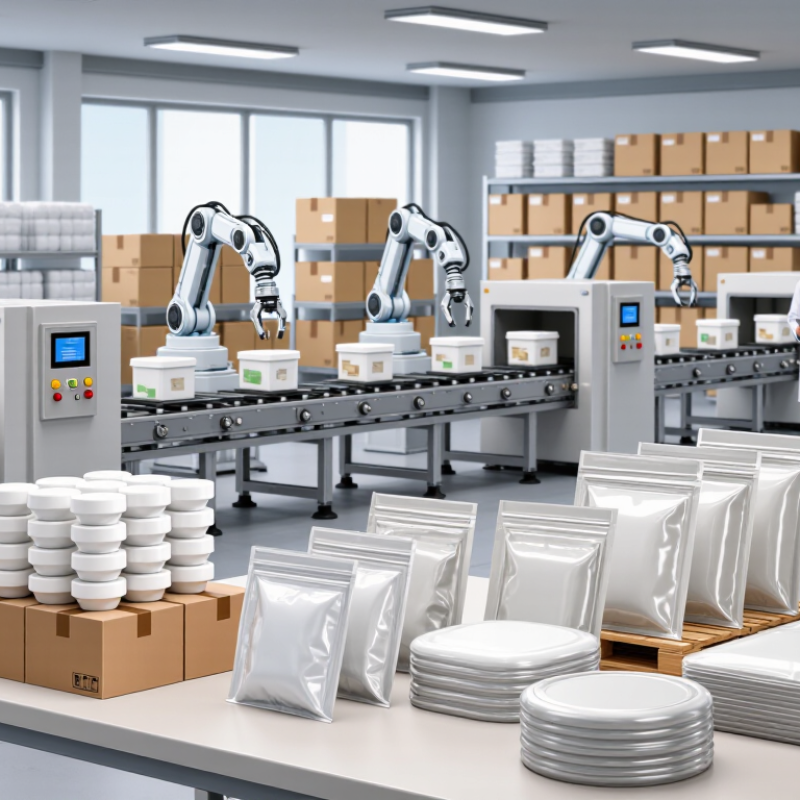
China’s food packaging market changed noticeably in 2024. Demand grew for lightweight pouches, recyclable paper packs, trays, cups, and resealable bags. Convenience food, delivery meals, snacks, and chilled products remained major demand drivers. Flexible packaging often wins on weight and transport efficiency. Rigid plastic still performs well when sealing strength and product visibility matter. Paper-based formats attract buyers seeking a more natural shelf appearance, but moisture resistance remains a practical weakness.
The best supplier is not simply the cheapest factory. An experienced supplier should explain material layers, sealing temperatures, barrier performance, and expected shelf life. They should also provide food-contact test reports, batch traceability, production samples, and clear quality tolerances. In 2024, buyers increasingly requested lower material use and improved recyclability. However, sustainability claims can be vague. Demand data is useful, but it is not perfect. Packaging choices still depend on food type, distribution distance, filling equipment, and local regulations.
Tips: Ask for three sample structures, not one. Test them with your actual food, oil, heat, and storage conditions. Check whether the supplier can repeat color, dimensions, and sealing results across several batches. A small pilot order may reveal more than a polished factory visit. Review the quotation carefully; low unit prices can hide mold fees, printing charges, or high minimum order quantities.
| Material | Common Food Packaging Formats | Main Food Applications | Key Functional Strengths | 2024 China Demand Indicator | Supplier Evaluation Priorities | Relevant Standards or Compliance Focus |
|---|---|---|---|---|---|---|
| Paper and Paperboard | Folding cartons, corrugated cases, paper bags, paper cups, coated food boxes | Dry foods, bakery products, takeaway meals, beverages, snacks, outer cases for e-commerce shipments | Low weight, printable surface, easy converting, strong availability of recycled fiber streams, and good performance for secondary packaging | 174.5 billion express parcels in 2024 in China created continued demand for corrugated transport packaging. Food delivery and packaged-food distribution are important users, although the official parcel figure is not food-specific. | Fiber quality, compression strength, moisture resistance, coating composition, print safety, and the percentage of recycled fiber where applicable | Food-contact paper and board requirements under China’s national food safety standards; restrictions on excessive packaging; ink and adhesive migration control |
| Flexible Plastics | Pouches, sachets, multilayer films, vacuum bags, retort pouches, shrink films | Instant foods, sauces, frozen foods, meat products, snacks, pet food, and liquid or powdered ingredients | Low material consumption, strong barrier performance, heat sealing, lightweight logistics, and suitability for portion packaging | China’s 2024 online retail sales of physical goods reached RMB 13.08 trillion. This large distribution channel supports demand for lightweight primary packs and protective secondary films, but the figure covers all product categories. | Oxygen and moisture transmission rates, seal strength, puncture resistance, retort performance, layer structure, and recyclability pathway | Food-contact plastic requirements, overall migration testing, specific migration limits, printing-ink safety, and applicable restrictions on single-use plastic products |
| Rigid Plastics | PET bottles, HDPE bottles, PP tubs, trays, cups, lids, and thermoformed containers | Edible oils, dairy products, sauces, ready meals, fresh foods, beverages, and chilled desserts | Good impact resistance, low breakage, flexible shapes, efficient filling-line integration, and comparatively low transport weight | China produced approximately 40 million tonnes of milk in 2024, according to national agricultural statistics. Dairy output is a major demand driver for bottles, cups, closures, and multilayer barrier containers; the figure represents product output, not packaging volume. | Resin grade, food-contact documentation, wall-thickness consistency, closure torque, leakage performance, recycled-content compatibility, and high-speed filling performance | China food-contact plastic standards, resin and additive compliance, migration testing, recycled-material traceability, and packaging-reduction requirements |
| Glass | Glass bottles, jars, sauce containers, beverage bottles, and heat-resistant glass containers | Sauces, pickles, alcoholic and non-alcoholic beverages, infant foods, premium foods, and preserved products | Excellent barrier against oxygen and moisture, high chemical stability, premium appearance, and suitability for hot filling or pasteurization | China’s 2024 beer production was about 35.25 million kilolitres, based on national industry statistics. Beer is a significant user of glass bottles and metal cans, while the total also includes other beverage packaging formats. | Glass strength, thermal-shock resistance, dimensional tolerance, bottle weight, closure compatibility, pallet efficiency, and breakage-control systems | Food-contact glass requirements, container strength testing, closure and liner safety, hot-fill validation, and transport packaging protection |
| Aluminium and Steel | Two-piece cans, three-piece cans, easy-open ends, metal tins, trays, and aluminium foil lids | Beer, soft drinks, canned foods, coffee, powdered foods, seafood, meat products, and ready-to-eat meals | High barrier protection, strong mechanical performance, fast filling-line compatibility, good shelf-life protection, and established recycling value | China’s 2024 beer output of approximately 35.25 million kilolitres provides a substantial demand base for beverage cans in addition to glass bottles. Canned food and shelf-stable beverages add separate demand streams. | Coating integrity, internal lacquer safety, can-seam quality, dent resistance, pressure performance, dimensional accuracy, and metal traceability | Food-contact coating and metal-container requirements, bisphenol-related compliance where applicable, seam inspection, and migration testing |
| Multilayer Composite Packaging | Aseptic cartons, aluminium-plastic laminates, paper-plastic laminates, and high-barrier composite pouches | Milk, plant-based beverages, juices, soups, sauces, powdered foods, and long-life liquid products | High barrier protection with low package weight, extended shelf life, efficient transportation, and suitability for ambient distribution | China’s 2024 milk production was approximately 40 million tonnes. Long-life dairy and beverage distribution supports demand for aseptic cartons and high-barrier laminated structures, although no official national series isolates carton consumption. | Barrier-layer stability, seal integrity, sterilization compatibility, converting precision, delamination resistance, recyclability route, and food-contact declarations for every layer | Food-contact paper, plastic, aluminium, adhesive, and ink requirements; migration testing; aseptic-process validation; and applicable recycling or packaging-reduction rules |
| Corrugated Transport Packaging | Regular slotted cartons, die-cut cases, insulated shipping boxes, dividers, and protective inserts | Online grocery, fresh food, beverages, snacks, household food products, and warehouse distribution | Efficient stacking, low cost, easy customization, good printability, and compatibility with automated warehouse and parcel systems | China’s 174.5 billion express parcels in 2024 demonstrate the scale of the national transport-packaging environment. This is a cross-industry indicator and should not be interpreted as food-only demand. | Edge-crush strength, burst strength, moisture resistance, board grammage, dimensional stability, pallet utilization, and recycled-fiber consistency | Corrugated-board performance testing, food-contact separation where required, ink and adhesive safety, and restrictions on excessive packaging |
| Reusable and Returnable Packaging | Reusable plastic crates, stackable totes, returnable pallets, insulated boxes, and refillable containers | Fresh produce, dairy logistics, foodservice distribution, cold-chain transport, and factory-to-warehouse movements | Multiple-use capability, reduced damage rates, standardized handling, and improved efficiency in closed-loop supply chains | China’s 2024 express-parcel volume of 174.5 billion increases pressure on logistics efficiency and packaging reduction. Reusable systems are most practical where collection, cleaning, and reverse logistics are controlled. | Cleaning validation, food-contact surface condition, impact resistance, temperature range, tracking capability, nesting efficiency, and total cost per trip | Food-contact material compliance, hygienic design, cleaning and disinfection procedures, cold-chain requirements, and reusable-packaging traceability |
Related Posts
-
Ultimate Guide to Choosing the Best Food Packaging Solutions for Your Business
-
Maximizing Your Investment with Best Food Packaging Solutions 5 Essential After Sales Service Tips
-

Global Reach of Best Food Packaging Solutions Elevating Quality Standards in International Markets
-
How to Choose Effective Food Packaging Solutions for Your Products
-
Best Food Packaging Solutions for Your Business Needs?
-
Innovative Food Packaging Solutions 5 Compelling Reasons to Upgrade Your Supply Chain