2026 Top Sustainable Packaging Suppliers Worldwide

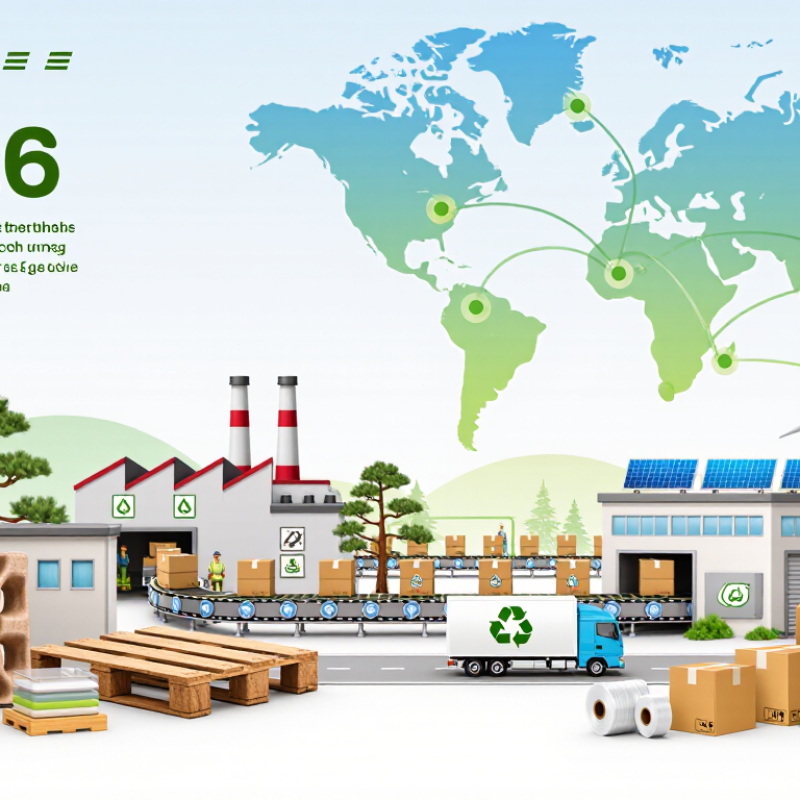
In 2026, sustainable packaging is moving from a niche promise to a practical business requirement. Brands now examine fiber sources, recycled content, barrier coatings, and end-of-life options. A package may look green yet fail in real-world recycling systems. That difference matters.

This guide introduces leading Sustainable Packaging Suppliers worldwide, with attention to measurable performance rather than attractive claims. We consider material innovation, production capacity, certification evidence, and supply-chain transparency. We also examine useful details, such as molded-fiber strength, compostable film conditions, and the ink used on paper cartons. Factory experience matters. So does consistency.

The selection process reflects publicly available information, technical documentation, customer experience, and industry credibility. Regional infrastructure is included because packaging rarely performs identically everywhere. A recyclable tray in Germany may face different collection limits in Southeast Asia or North America. Data can be uneven. Some supplier claims still need independent verification. No supplier is perfect. That is worth remembering.

Readers will find established manufacturers, emerging specialists, and companies investing in lower-impact production. The guide does not treat sustainability as a single score. Cost, durability, food-contact suitability, logistics, and waste systems also influence a responsible decision. A lighter package is not automatically better if it breaks during transport. Practical evidence remains essential.

2026 Top Sustainable Packaging Suppliers Worldwide

What Makes a Packaging Supplier Sustainable in 2026

2026 Top Sustainable Packaging Suppliers Worldwide

A sustainable packaging supplier in 2026 must offer more than recycled materials. It should show measurable progress across sourcing, production, transport, and end-of-life recovery. During supplier reviews, examine the percentage of post-consumer content, factory energy sources, water use, and waste records. Proof matters. Reliable suppliers provide recent test reports, chain-of-custody documents, and third-party audits. They also explain limitations instead of making broad environmental claims.

Material choice should match the product and local waste systems. A lightweight paper pouch may reduce transport emissions, yet a plastic barrier could improve shelf life and prevent food waste. Compostable packaging is not automatically sustainable if suitable collection facilities are unavailable. This is where practical expertise matters. Ask suppliers to provide lifecycle data, recycling guidance, and performance results from real shipping conditions. Some data may still be incomplete. That deserves honest discussion, not polished marketing.

Tips: Request facility-level energy data. Check whether recycled content is independently verified. Test packaging after heat, moisture, stacking, and vibration exposure. Compare total impact, not just material weight. Keep questioning the design. Suppliers should welcome measurable improvements, even when the first solution is not perfect.

Leading Sustainable Packaging Suppliers by Region

In 2026, leading sustainable packaging suppliers differ by regional needs, regulations, and available materials. European suppliers often specialize in recyclable paperboard, molded fiber, and refill-ready formats. They typically provide detailed lifecycle data, recycled-content evidence, and traceable forestry documentation. Compliance is important, but it does not replace practical performance testing.

Asia-Pacific suppliers offer strong production capacity for flexible films, cartons, and reusable transport packaging. Many facilities now use water-based inks, lightweight structures, and renewable electricity. Buyers should inspect factory records, material specifications, and independent audit results. A low unit price can hide higher transport emissions or difficult end-of-life recovery. Local expertise matters.

North American suppliers commonly focus on curbside-recyclable formats, recycled plastics, and fiber-based food packaging. Regional warehouses can shorten delivery distances and improve supply reliability. Latin American producers increasingly develop agricultural-fiber packaging near farming communities. Suppliers in the Middle East and Africa often prioritize heat resistance, efficient shipping, and locally available fibers. Conditions vary widely. No regional ranking is perfect. Some sustainability claims remain difficult to compare because testing methods differ. A responsible assessment should review durability, sourcing, manufacturing energy, transport, and disposal options together. I have found that a package performing well in a laboratory may fail in humid storage, rough distribution, or ordinary household sorting. That gap deserves closer attention.

Key Materials and Technologies in Sustainable Packaging

2026 Top Sustainable Packaging Suppliers Worldwide

Key Materials and Technologies in Sustainable Packaging

Sustainable packaging is shifting from simple material replacement to measurable system design. Paper-based cartons, molded fiber trays, recycled plastics, and compostable films each solve different problems. Their performance depends on moisture, heat, product weight, and transport distance. Recycled content can reduce virgin material demand, but inconsistent feedstock may affect strength and appearance. No material is perfect.

Recent supplier evaluations increasingly examine barrier coatings, lightweight structures, mono-material designs, and advanced sorting technologies. Water-based coatings can improve grease resistance without adding complex layers. Digital traceability helps verify recycled content and production data. In practical trials, a thinner package may reduce emissions, yet fail during stacking. That lesson is easy to overlook. Reliable decisions require laboratory testing, pilot shipments, and clear lifecycle evidence rather than attractive claims.

Tips: Request test data for compression, sealing, moisture, and temperature resistance. Check whether local recycling facilities can process the proposed format. Ask suppliers to explain material origins and certification limits. Small prototypes reveal weak corners, loose seals, and difficult labels before large-scale production. Keep the design simple when performance allows. Simpler is often better.

2026 Top Sustainable Packaging Suppliers Worldwide

Key Materials and Technologies in Sustainable Packaging

Packaging material recycling rates provide a practical benchmark for evaluating sustainable packaging solutions. Paper and cardboard, glass, and metal show stronger established recycling performance, while plastics and wood highlight opportunities for improved mono-material design, recycled content, reuse systems, and advanced sorting technologies.

Source: Eurostat, Packaging waste by waste management operations, EU-27, 2022. Values represent recycling rates by material.

How to Compare Suppliers, Certifications, and Environmental Claims

2026 Top Sustainable Packaging Suppliers Worldwide

Comparing sustainable packaging suppliers requires more than reading a recycled-content percentage. Request product specifications, recent test reports, and the exact material composition. Ask for evidence. A credible supplier should explain whether certification covers the factory, product, or entire supply chain. These scopes are not interchangeable.

Check certifications against the intended market and disposal system. FSC or PEFC may support responsible fiber sourcing, while ISO 14001 evaluates environmental management practices. Compostability standards, such as EN 13432 or ASTM D6400, require careful interpretation. A package labeled compostable may need an industrial facility, not a household compost bin. Claims need context.

Review traceability, energy data, water use, and transport assumptions. A supplier with clear chain-of-custody records is easier to assess than one offering attractive percentages without documentation. Compare lifecycle studies carefully. Some studies exclude printing, adhesives, or end-of-life treatment. That can distort the result. A small pilot order can reveal sealing problems, moisture damage, or inconsistent sizing before a larger contract. Supplier reviews are never perfect. Data may be incomplete, and certification documents can expire. Record every assumption, verify renewal dates, and ask uncomfortable questions about what the environmental claim does not include.

2026 Top Sustainable Packaging Suppliers Worldwide - How to Compare Suppliers, Certifications, and Environmental Claims

Anonymized supplier-comparison matrix based on internationally recognized certification schemes, packaging standards, and evidence requirements. Supplier-specific claims should be verified before contracting.

Comparison Dimension Packaging Supplier Profile Relevant Material or Service Recognized Standard, Certification, or Regulation Evidence to Request Strong Qualification Signal Environmental-Claim Review
Fiber traceability Profile F-01
Paper and board converter with certified forest-material sourcing
Corrugated boxes, folding cartons, paper mailers, molded-fiber formats FSC Chain of Custody or PEFC Chain of Custody; ISO 14001 for environmental management Current certificate, certificate scope, product-group list, site address, and transaction or delivery documentation Certificate covers the exact manufacturing site and the specific packaging product being quoted “Responsible forest sourcing” should identify the certification system and avoid implying that every forest-related impact is eliminated
Recycled paper content Profile F-02
Paper-based supplier offering post-consumer recycled content
Cartons, bags, wraps, labels, and secondary packaging ISO 14021 for self-declared environmental claims; recycled-content chain-of-custody evidence where applicable Material specification, minimum and average recycled content, fiber breakdown, and mass-balance calculation Recycled content is stated as a percentage by mass and supported by batch or product documentation “Recyclable” and “recycled” are different claims; recycled content does not automatically prove local recyclability
Flexible mono-material packaging Profile P-01
Flexible-film producer focused on simplified polymer structures
PE or PP pouches, liners, wraps, and protective films Design-for-recycling guidance from recognized industry programs; local collection and sorting requirements Full layer structure, polymer identification, ink and adhesive details, sealant composition, and recycling assessment Single-polymer or compatible structure with documented performance in the target market’s collection and sorting system “Designed for recycling” is not equivalent to “widely recyclable”; the claim should name the geography and required infrastructure
Recycled plastic content Profile P-02
Rigid or flexible plastic supplier using recycled feedstock
PET, HDPE, PP, or other specified polymer packaging ISO 14021; ISO 22095 chain-of-custody principles may support identity, segregation, or mass-balance systems Polymer type, recycled-content percentage, source classification, food-contact compliance where relevant, and third-party verification Content percentage, calculation method, and whether the material is post-consumer or pre-consumer are clearly disclosed Do not combine post-consumer and pre-consumer content into one unexplained figure
Compostable packaging Profile C-01
Supplier offering certified compostable films, coatings, or molded items
Food-service items, organic-waste liners, selected flexible and molded-fiber formats EN 13432 for packaging recoverable through industrial composting; ASTM D6400 or ASTM D6868 for applicable U.S. contexts Certificate number, product code, disintegration and biodegradation scope, industrial-composting conditions, and labeling instructions Certification applies to the finished product, not only to a resin, coating, or individual component “Compostable” must specify industrial or home composting; it must not imply that the item biodegrades harmlessly in the open environment
Bio-based feedstock Profile B-01
Supplier using renewable biological feedstock or certified mass balance
Bio-based polymers, coatings, films, adhesives, and molded packaging ASTM D6866 for bio-based carbon measurement; ISCC PLUS or an equivalent recognized chain-of-custody system for applicable mass-balance materials Bio-based carbon percentage, feedstock origin, allocation method, certificate scope, and product declaration Bio-based content is quantified separately from biodegradability and recyclability “Plant-based” does not prove compostability, recyclability, lower emissions, or responsible land use
Life-cycle carbon data Profile L-01
Supplier providing product carbon-footprint or life-cycle data
Any packaging format with measurable material, manufacturing, transport, and end-of-life impacts ISO 14040 and ISO 14044 for life-cycle assessment; ISO 14067 for product carbon footprint; ISO 14025 for Type III environmental declarations Functional unit, system boundary, database sources, assumptions, allocation method, reporting period, and independent review statement Two packaging options are compared using the same functional unit and equivalent performance requirements “Lower carbon” is meaningful only when the baseline, scope, geography, and time period are disclosed
Environmental management Profile M-01
Packaging manufacturer with a formal site-level environmental system
Converting, extrusion, molding, printing, coating, and assembly operations ISO 14001 environmental management system certification Valid certificate, certified site list, scope, expiry date, major environmental objectives, and corrective-action process Certification covers the production location that will manufacture the ordered packaging ISO 14001 demonstrates a management system; it does not independently prove that a product is sustainable or low carbon
End-of-life compatibility Profile E-01
Supplier providing market-specific recyclability or recovery guidance
Paper, board, rigid plastic, flexible plastic, metal, glass, and mixed-material packaging Applicable national and regional packaging rules; recognized recyclability protocols; EU Regulation 2025/40 where the European market applies Material composition, dimensions, closures, labels, adhesives, additives, sorting assumptions, and target-market recovery data Assessment is performed for the destination market rather than based solely on laboratory results “Recyclable” should identify the collection, sorting, and reprocessing conditions needed for the claim to be true
Supply reliability Profile S-01
International supplier with documented production and continuity controls
High-volume primary and secondary packaging programs ISO 9001 for quality management; documented business-continuity and change-control procedures Manufacturing locations, approved-substitute policy, capacity statement, quality-control plan, lead-time range, and escalation contacts At least one qualified backup route for critical materials, tooling, or production sites Environmental benefits should not be assessed without considering product protection, waste prevention, and supply continuity
Food-contact suitability Profile R-01
Supplier producing packaging for direct or indirect food contact
Paper, board, plastic, metal, glass, coatings, inks, adhesives, and closures Applicable food-contact legislation in the destination market, such as EU Framework Regulation 1935/2004 or relevant U.S. requirements Declaration of compliance, migration or extraction testing, composition statement, intended-use limits, and change-notification procedure Documentation covers the complete packaging structure and the actual food, temperature, and contact conditions “Non-toxic” is too broad unless the specific substance, exposure route, test method, and legal threshold are identified
Supplier comparison scorecard Recommended weighting
Use the same scoring method for every shortlisted supplier
Technical performance, environmental evidence, compliance, cost, and continuity Suggested weighting: 25% functional performance; 20% verified environmental data; 15% certifications; 15% regulatory compliance; 15% total cost; 10% supply resilience Completed questionnaire, certificates, test reports, life-cycle documentation, samples, quotations, and corrective-action records Highest score is awarded only when evidence is current, product-specific, site-specific, and relevant to the destination market Unverified marketing language receives no environmental score until supported by a recognized standard or transparent evidence
Verification note: Certification validity, regulatory applicability, recyclability infrastructure, and environmental claims should be checked for the specific product, manufacturing site, destination market, and contract period before purchase.

Future Trends Shaping the Global Sustainable Packaging Market

The 2026 sustainable packaging market is moving beyond simple material substitution. Suppliers are developing fiber-based trays, recyclable mono-material films, and refill systems for different product categories. The practical question is no longer, “Is it green?” It is, “Will it work?”

Future packaging will be designed around measurable performance. Engineers are testing seal strength, moisture resistance, shelf stability, and transport damage before wider production. A lightweight pouch may reduce material use, yet fail in humid warehouses. A molded fiber box may look responsible, but require better barriers for oily foods. Small details matter. Digital product records may also help buyers verify recycled content, sourcing, and disposal guidance. However, data systems can become confusing when suppliers use different measurement methods.

Reuse models are gaining attention in food delivery, personal care, and retail logistics. Their success depends on convenient return points, durable containers, and efficient washing networks. Local collection conditions will shape each solution. One format cannot serve every market. Some pilots will fail. That is useful evidence, not wasted effort, if companies document return rates, cleaning energy, damage, and customer behavior. Suppliers with transparent testing records and realistic life-cycle comparisons will earn stronger trust. Yet sustainability claims still need careful review, because a recyclable package is not automatically recycled in every community. The market is becoming more technical, but honest uncertainty remains part of responsible innovation.